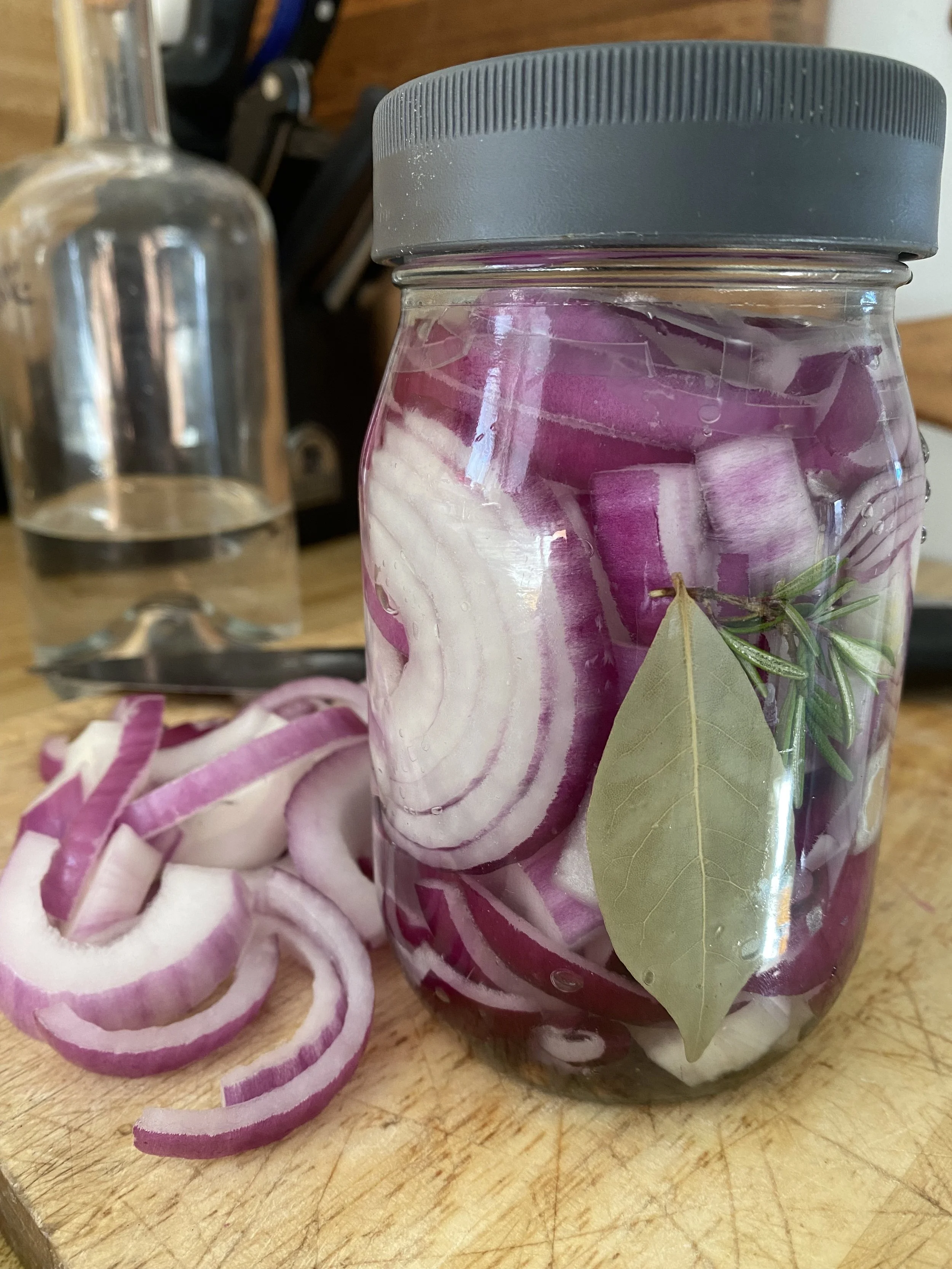
Lacto-fermented onions are a step beyond pickled onions. They are delicious, easier to digest, probiotic and super simple to make! All you need is your favorite onions (red, tiny pearl, spring green…) some jars and some brine. Let’s go!
Ingredients
Onions of your choice. Here are some possibilities and amounts to fill a pint mason jar:
A large red onion (very pretty), or yellow, 20 tiny onions make for perfect tangyzingy little bites o a mezze or tapas platter, a bunch of slender spring onions will fit attractively in a jar, and garlic scapes also love to be fermented this way.
optional herbs and spices: black peppercorns, coriander seeds, whole cumin, fresh sprigs or leaves of rosemary, sage, thyme, bay leaf, whatever you’ve got.
Materials and equipment:
Regular salt, water, jars with lids (any size - I use pint mason or ball jars with plastic lids), a measuring cup and measuring spoons, maybe a kitchen scale, chopping board, big and small knife.
Technique:
1) If using a regular onion, remove papery outer layers and ends, then slice into half moons or quarters. For spring onions, wash them and trim off any roots. Trim the green ends off so that they will fit into the jar with about 2 inches to the rim. Tiny little onions can be cleaned up and tumbled into the jar as they are.
1a) Before adding the onions to the jar, you might want to toss in some black peppercorns, cumin, coriander. The reason to put them in first is because they will float. You can trap them in the bottom of the jar by putting the onions on top. Or you could push some herbs such as bay leaf, fresh rosemary, thyme sprigs or sage down the sides.
2) Make 3% brine (1 t salt/cup water = approximately 3%, or more scientifically; 3 g salt per 100 g water) and pour it in to cover the onions. Optional; you can pour in a dollop of liquid from a previous fermentation - sauerkraut, fermented pickles, yogurt whey - if you wish to give your ferment a boost. Not necessary though, You’ll create an environment for the correct microbe populations to thrive, boom and bust, setting the stage for the next wave of microbes.
3) Put a lid on loosely and put the jar out of the light at room temperature. Wait 4-5 days, checking every day that everything remains submerged. The microbes need an ANaerobic environment. Taste them - when they are yummy to you, they are done. Tighten the lid and put them in the fridge. They will continue to ferment, but very slowly, and will be quite happy in there for 6 months or more.